


Hummingbirds of the Bogotá Region: Exploring Colombia’s Eastern Andes
Updated: May 19
Why Bogotá Is a Hummingbird Paradise
Colombia is home to more hummingbird species than any other country, and the Eastern Andes near Bogotá are a global hotspot for these spectacular birds. Within a short distance, you can travel from the high-altitude savanna to lush cloud forests and windswept páramo, each hosting unique hummingbird communities.
High-altitude life demands remarkable adaptations. Hummingbirds here survive cold nights, thin air, and scarce nectar with:
Torpor at night to conserve energy during freezing temperatures.
Rapid metabolism, with hearts beating over 1,000 times per minute to efficiently use oxygen.
Specialized feeding, adapted to flowers few other species can access.
Whether you’re a birdwatcher in Bogotá or a nature enthusiast visiting Colombia, these hummingbirds offer unforgettable encounters.
Exploring Bogotá’s Andean Ecosystems
Cloud Forests
High-elevation cloud forests provide shelter and abundant nectar. Misty trails and flowering shrubs host species like the Sword-billed Hummingbird, with its impossibly long bill, and the Golden-bellied Starfrontlet, an endemic species shimmering in metallic gold and green.
Montane Forest Edges
Forest edges offer open spaces for agile hummingbirds. The Collared Inca and Green/Black-tailed Trainbearers thrive here, flashing brilliant colors and acrobatics as they forage among flowers.
Páramo
Above 3,500 meters, the high-altitude páramo is home to hardy species like the Bronze-tailed Thornbill and the Green-bearded Helmetcrest, unique to Colombia’s Eastern Andes. These species are perfectly adapted to cold, windy conditions and sparse vegetation.
Iconic Hummingbirds of the Bogotá Region

Sword-billed Hummingbird (Ensifera ensifera)
One of the most extraordinary birds in the world, this species has a bill longer than its body. It coevolved with long-tubed flowers such as Passiflora mixta, creating a perfect example of plant–pollinator specialization in the Andean cloud forests. Spotting one feeding is a highlight for any birdwatcher.

White-bellied Woodstar (Chaetocercus mulsant)
One of Colombia’s tiniest birds, this delicate star-shaped hummingbird is quick and elusive. Despite its size, it plays a vital role in pollinating small high-Andean flowers that larger hummingbirds can’t access.

Golden-bellied Starfrontlet (Coeligena bonapartei)
A dazzling Andean gem, this hummingbird shimmers with metallic gold and green under bright sunlight. Endemic to Colombia, it is found only in high-elevation cloud forests of the Eastern Andes, making every sighting a rare and special experience.

Booted Racket-tail (Ocreatus underwoodii)
Easily recognized by its long tail feathers that end in tiny “rackets” and feathered legs that look like boots, this species is both whimsical and elegant. Its acrobatic hovering displays are a true spectacle in páramo and montane habitats.

Great Sapphire-wing (Pterophanes cyanopterus)
A jewel of the high Andes and one of the largest hummingbirds in the world, this species’ brilliant blue wings flash like sapphires in the sun. It prefers forested ravines and edges, often perching quietly before launching into sudden, dazzling flight displays.

Green-bearded Helmetcrest (Oxypogon guerinii)
A true high-altitude specialist, this species inhabits the cold, windswept páramo above 3,500 meters. Unique to Colombia’s Eastern Andes, its striking green “beard” and crested head make it unmistakable and a rare treat for those willing to brave the chill for a glimpse.
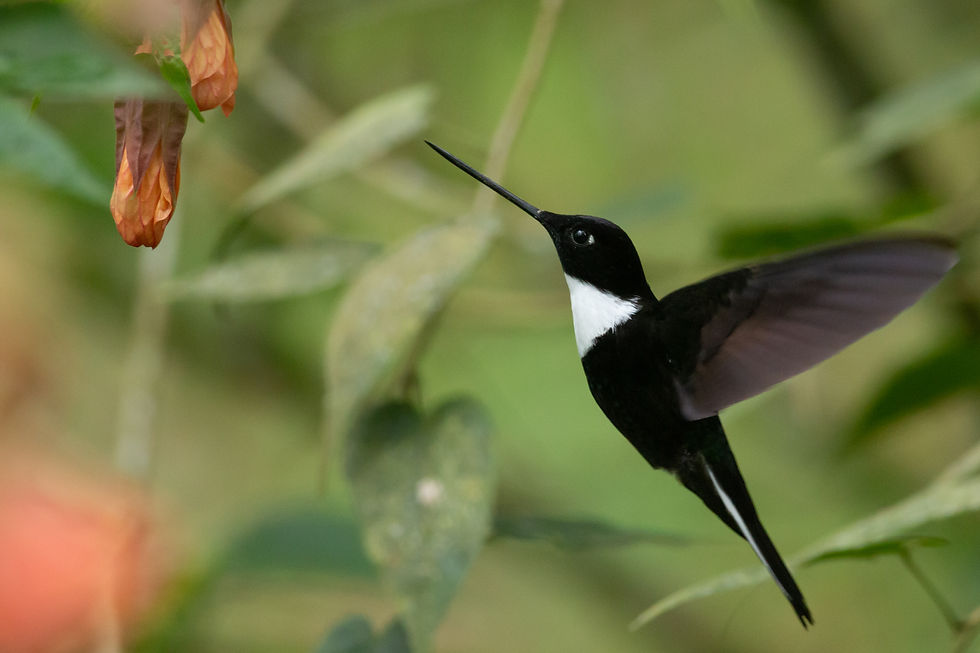
Collared Inca (Coeligena torquata)
Known for its iridescent green body and brilliant chest collar, this hummingbird thrives along forest edges and gardens. Its confident, curious nature often allows close-up observation, making it a favorite among visitors to Bogotá’s cloud forest reserves.
Hummingbirds and Andean Flowers: A Vital Partnership
Hummingbirds are essential pollinators in the Eastern Andes. Many plants rely exclusively on these birds for reproduction. Flowers have evolved bright red or orange tubular shapes to attract hummingbirds while reducing competition with insects.
This interdependence highlights the importance of protecting high-Andean ecosystems. Conserving cloud forests and páramo ensures hummingbirds and native plants continue to thrive.
Explore Chingaza National Natural Park, the páramo of Sumapaz, or cloud forest trails in Chicaque while observing endemic and high-Andean species up close.
Whether you are a seasoned birder or visiting Bogotá for the first time, the region’s hummingbirds offer a glimpse into the extraordinary life of Colombia’s Eastern Andes. From endemic species to high-altitude specialists, every sighting tells a story of evolution, adaptation, and natural wonder.


